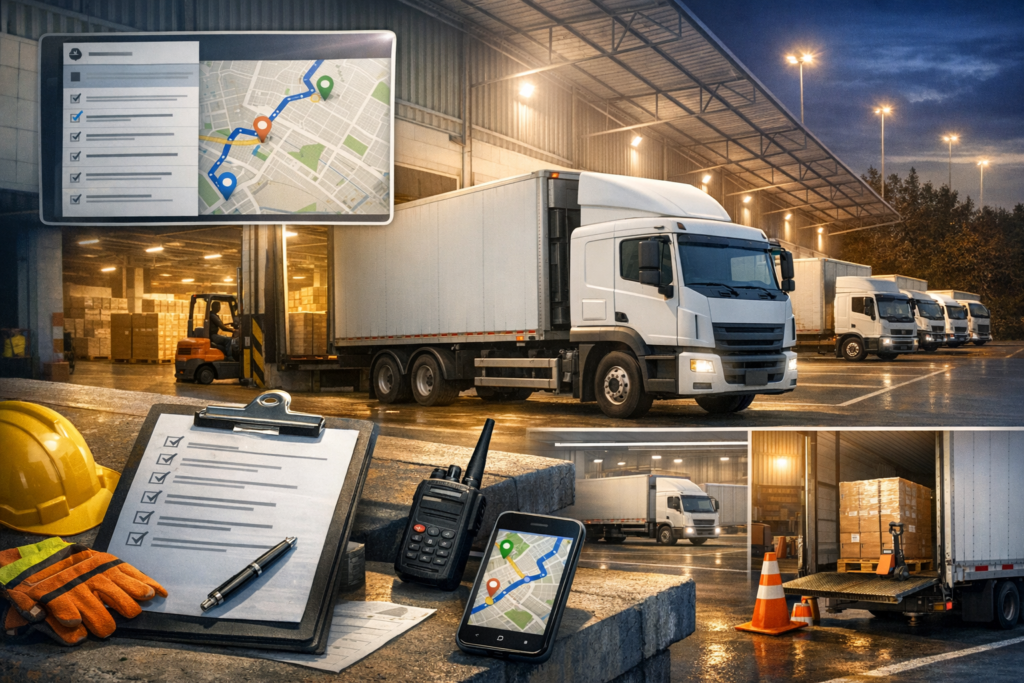
Get to “On Time” Faster—Without Skipping Safety
Delays usually come from the same few causes: unclear delivery windows, missing paperwork, confusing access rules, slow loading/unloading, and last-minute communication gaps. This playbook helps drivers, warehouses, factories, and businesses coordinate the essentials before the first truck tire turns in.
1) Truck Delivery Preparation (Do This Before You Roll)
Smart preparation reduces time spent waiting on-site and keeps loading predictable.
- Confirm the delivery profile: Verify the ship-to address, dock/door (if assigned), delivery reference number, and required contact person.
- Check loading/unloading details: Note whether your freight is palletized, requires tarping, needs liftgate, or uses rollers/fork pockets.
- Review route and access notes: Pay attention to gate instructions, truck size restrictions, one-way streets, and any “no right turn”/height limits.
- Bring what the receiving team may ask for: Bills of lading, packing slips, and any pickup/delivery confirmation materials specified in the delivery profile.
- Plan your staging: Identify where you’ll wait when you arrive so you don’t block traffic or keep the dock idle.
Driver tip
If your operations use PrepKnow delivery profiles, treat them like a pre-trip checklist. When the dock team changes a door or contact, update your plan immediately.
2) Loading and Unloading Safety: The Dock Needs Your Full Attention
Safety isn’t “extra”—it’s how you avoid repeat trips, damaged freight, and slowdowns. Before arrival, review the safe handling steps included in the delivery profile.
- Secure the vehicle: Confirm parking brake, wheel chocks (if required), and proper shutdown before leaving the cab.
- Wear required PPE: Follow the warehouse’s stated PPE rules for the loading area.
- Use the right equipment: Don’t improvise. If liftgate/rollers/fork sleeves or specific dock equipment is required, plan to use it the way the receiving site expects.
- Communicate before moving freight: Establish who will guide positioning, where spotters are required, and what the receiving team expects at the door.
- Inspect the staging area: Watch for uneven ground, overhead hazards, and pedestrian walkways.
- Keep pedestrians clear: Prevent crossing paths during loading/unloading—especially when backing or when dock equipment is in motion.
- Confirm freight count and condition: If there’s a discrepancy or damage, document it per the site’s process before leaving.
For receiving teams
Posting clear loading/unloading details (door requirements, pallet handling rules, and who to contact at the dock) helps drivers arrive ready and reduces time spent troubleshooting on-site.
3) Warehouse Access Rules: Reduce Gate Chaos With Clear Entry Info
Warehouses and factories often run on tight schedules. The fastest deliveries happen when gate staff and dock staff get the right information in advance.
- Gate hours and appointment rules: Know whether deliveries are appointment-only or walk-in.
- Check-in steps: Where to park first, how to present ID, and whether you must check in before moving to a dock.
- Communication expectations: Who should receive your arrival notice—dispatch, a dock supervisor, or a specific role.
- Vehicle restrictions: Axle limits, height limits, trailer type restrictions, or required securement standards.
- Documentation at check-in: Confirm whether you need a printed copy or whether digital confirmation is accepted.
Best practice: Add these details to your delivery profile so every driver gets the same instructions—without relying on verbal handoffs.
4) Overnight Truck Parking: Plan the Stop Before It’s Time to Sleep
Overnight parking problems create the biggest “hidden delays.” You can’t control traffic, but you can control whether you arrive stressed and rushed.
- Look up overnight parking availability: Use the parking information linked to the route/delivery profile (and any site-approved options).
- Consider arrival timing: If your delivery is early, plan your overnight stop to match your check-in window.
- Know the local rules: Follow posted regulations for truck parking and any site constraints.
- Keep documents accessible: If you’ll be moving at night or early morning, store paperwork so you can check in quickly when you arrive.
- Set expectations with your dispatch/receiving contact: Let the right person know your planned arrival and any potential time changes.
For businesses receiving deliveries
Sharing overnight parking guidance (approved areas, where drivers should stage, and any restrictions) prevents drivers from guessing and reduces the chance they arrive unprepared.
5) Route Planning for Vans and Trucks: Build Time Buffers Into the Real World
Route planning isn’t just about distance—it’s about access and predictability.
- Choose the route that matches the vehicle: Consider height/weight limits and turn restrictions relevant to trucks and vans.
- Account for truck/van loading zones: If your route must pass gates with limited access, plan alternatives.
- Plan staging time: If you may need to wait for an open door or a dock slot, include that in your timeline.
- Use consistent start points: If your dispatch assigns pickup locations, keep them consistent so drivers don’t lose time navigating each time.
- Review “arrival notes”: Many delays happen because drivers miss the last-mile detail—where to check in, which entrance to use, or what to do when the dock is busy.
Pro move
When route and access information is included in a PrepKnow truck/van route entry, the driver has one source of truth from planning through arrival.
6) Communication Between Drivers and Businesses: The Fastest Workflow Uses Status Updates
Even well-planned deliveries experience changes—traffic, weather, loading queue times, or equipment swaps. The goal is to communicate early and clearly so the receiving team can adapt.
What drivers should send (simple and actionable)
- Arrival update: “Arrived at gate/dock” with the delivery reference.
- Delay reason + revised time: If late, state the reason you can share and provide the next best estimated arrival.
- Status change: “Loading,” “Unloading,” “At dock,” “On hold,” or “Completed.”
- Escalation contacts: If check-in is blocked or the dock contact is unavailable, communicate who should be contacted next (as listed in the profile).
What businesses receiving deliveries should do
- Maintain one delivery contact path: Define a dock contact and gate/check-in contact so drivers aren’t searching.
- Publish parking and door details: Drivers should know where to go and what to do once there.
- Respond to updates promptly: Quick acknowledgement helps the driver adjust without waiting for calls.
How PrepKnow helps: PrepKnow’s platform is designed for delivery profiles and driver communication—so arrival/delay/status updates don’t get lost in text threads or missed call attempts.
7) Faster Workflow: The “Pre-Trip → Arrival → Loading → Completion” Loop
Use this repeatable workflow to reduce friction across every delivery.
A. Pre-Trip (Driver + Dispatch)
- Open the delivery profile for the stop.
- Confirm dock/door or check-in instructions and required documents.
- Verify route/access notes and parking/staging guidance.
- Plan a realistic arrival window and communicate if conditions change.
B. Arrival (Driver → Gate/Dock)
- Send an arrival status update with the delivery reference.
- Follow warehouse access rules (where to park first, check-in method).
- If the door isn’t available, ask for the next step and share your status.
C. Loading/Unloading (Joint Safety + Execution)
- Confirm equipment and handling expectations before moving freight.
- Coordinate positioning and spotter needs.
- Update status when loading/unloading starts and when it’s nearing completion.
D. Completion (Driver + Receiving Team)
- Confirm the delivery is complete and share completion status.
- Document any exceptions using the site’s normal process.
- Close out the delivery reference so dispatch and the receiving team can plan the next step.
Quick Checklist for Your Next Stop
- Delivery profile reviewed (dock/door, documents, handling details)
- Route + access rules checked (height/turn restrictions, gate instructions)
- Overnight parking planned (so arrival isn’t rushed)
- Safety steps understood (PPE, equipment, staging area awareness)
- Status updates sent (arrived, delayed with revised ETA, start/finish)
When drivers and receiving teams align on these basics, deliveries become more predictable—and that’s where faster workflow really comes from.